
 님
님
 내 쑥쑥트리
 쪽지
쪽지 내글
내글 스크랩
스크랩 내댓글
내댓글 북클럽
북클럽 날따방
날따방 모임터
모임터 쑥쑥몰
쑥쑥몰
 체험이벤트
체험이벤트


 로그아웃
로그아웃 PC버전
PC버전




* 봄을 위한 이야기가 마이 필요합니다.^^;;
알을 깨고 나 온 병아리와 아기 오리며, 꽃, 나비,,,
모두가 어울어진 멋진 이야기가 있지요.
오디오도 노래는 으찌나 재미난지~!
여러가지 교훈도 너무 좋구요!
- 따라쟁이 병아리의 자아발견!! ^^;;
그리고 친구간의 우애 등등,,,
 * 워크시트의 재구성. (어설프고 한가지만 되는 워크시트는 거부한다!!- 나만의 워크시트로 변신---!)
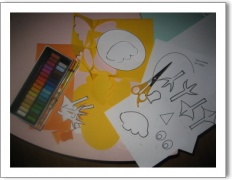
 * They quietly look alike. But they're different.How are they different? ---------The duckling has webbed feet.......The chick has beak which is sharp just triangle shape, the dukling has bill which is round and flat. 이런 식으로 대화하고, 아이들에게 어떤 발이 누구것이고,어떤 부리가 누구에게 맞는지, 분류를 하는 시간도 가졌습니다. * 단지 단순히 이야길 읽고, 만들기만 하는 것은 Jiny의 스토리텔링 원칙에 배반, 배신!!! ㅎㅎ" * 원래 워크시트를 출력한 곳은요,, http://www.dltk-kids.com/animals/chicks.htm Easter Chick
  * 제공해 주신 것은 고맙지만, 소올직히,,우리 것이 훠얼씬 이쁘당. ㅠㅠ
 This cute Easter Chick will give you something to remember those little crafting fingers with. (It makes a great gift for long distance grandparents!)
This craft doesn't take a toilet paper roll. All you'll need is a printer, piece of paper (I prefer construction paper), scissors, glue and crayons (or something else to colour with).
 | Print out the template of choice. |
| Colour (where appropriate) and cut out the template pieces. |
| Glue the face pieces (circle eyes and triangle beak) onto the head. |
| Glue the legs onto the body. |
| Now comes the fun part! Trace your child's hands onto another piece of paper (yellow construction paper works well or use white paper and colour in). |
| Glue the hands onto the body (thumbs up) to form wings. |
| Instead of gluing on the wings, you can use brass bendable tack things so the wings can be moved (I always forget what those things are called!) |
| If you don't have a colour printer, you can print one black & white copy on yellow construction paper and a second copy on white. Then mix and match the pieces. |
| Buy feathers (or pluck your old feather duster!) and glue a few feathers onto the top of the chick's head. |
| Close the template window after printing to return to this screen. |
| Set page margins to zero if you have trouble fitting the template on one page (FILE, PAGE SETUP in most browsers). |
 Have You Seen My Duckling?
  Farmer Duck
 이러다가 거의 '조류학자가 되는 것 아닌가?' 하는 기우를 갖게 한 책. ㅋㅋ주인공 오리 종류가 다름아닌 말라아드라는 종인데, 좀 더 자세히 알아보려면,여기를 참고 하심 좋지요. http://www.enchantedlearning.com/subjects/birds/printouts/Mallardprintout.shtml
 | Mallard Duck | Animal Printouts Label Me! Printouts |
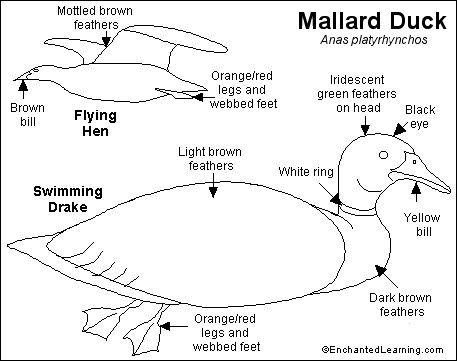
Mallard Ducks are common wild ducks that live in Northern Hemisphere wetlands. Most domestic (tame) ducks were bred from mallards. The female is called a hen, the male is called a drake, and the young are called ducklings.
Anatomy: Males are brightly colored, having a green head, a white collar, and a bright yellow bill. Females are mottled brown with a brown bill. Mallards are about 20-23 inches (51-59 cm) long.
Diet: Mallard ducks have a varied diet. They eat insects, worms, frogs, snails, slugs, small shellfish, grasses, and other plants that grow near shore.
Eggs and Nests: Mallards build cup-like nests made of grass and leaves; they are lined with duck down (delicate feathers). Nests are usually on the ground in dense undergrowth. Females lay 5-14 greenish-white eggs in each clutch (a set of eggs laid at one time). The female cares for the young.
 Let's Read and Find Out 시리즈 중에서.
그림이 너무 아름다운 과학책이며, 내용도 차암 좋아서
언제까지나 우리의 애장품이 될 만하답니다.
맨 뒷 장에는 간단한 실험을 할 수있도록 제시하고 있어서,
생활속 원리과학으로 적격이지요.
-----------------------------------------------
* 이런 내용들이야, 쑥쑥 컨텐츠 공모게시판이나,
공구활용예문을 이용하심, 멋지게 해결 된답니다!!
이렇게 봄나들이 뿅뿅뿅~~ 해 보자구요 ^----------^


 가장 좋은 영어 동화책..