
 님

 내 쑥쑥트리
 쪽지
 내글
 스크랩
 내댓글
 북클럽
 날따방
 모임터
 쑥쑥몰
 체험이벤트


 로그아웃
 PC버전




지난 시간에는 대문자의 사용에 대해 알아보았습니다.
(푸훗! 삼백 년전에 올렸던 거라 Review하기도 민망합니다... T v T)
Let's review!
We should use a capital letter at the beginning of each sentence.
We should use a capital letter for the word “I”
We should use a capital letter at the beginning of special names.
We should use a capital letter when you write the days of the week, months of the year, and special holidays.
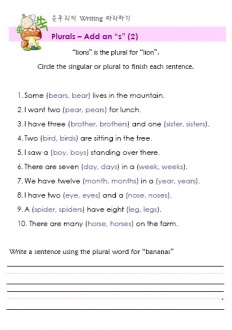
오늘은 단수 명사를 복수형으로 만드는 방법에 대해 알아보도록 합지요.
- 음... 하다 보니 어느덧 Writing이 아니라 문법이 되어가는 듯 하지만, 이것 역시 쓰기의 일환이니 짚고 넘어가도록 하겠습니다.
※ 그림을 클릭하시면 PDF 파일을 다운로드 하실 수 있습니다.
잠깐! PDF 프로그램이 없으시다면 reader를 다운로드 먼저 하세요!!
PDF Reader 다운 받기 GO~!
먼저, 단수형이란 무엇인가, 복수형이란 무엇인가를 알아보도록 하겠습니다.
Singular Noun Definition: When a noun means one only, it is said to be singular.
Examples: boy, girl, book, church, box
Plural Noun Definition: When a noun means more than one, it is said to be plural.
Examples: boys, girls, books, churches
 | 1. 일단 일반적인 복수형을 만드는 방법을 알아봅시다. Add an S |
 | 2. "es"를 붙여 복수형으로 만드는 단어에 대해 알아봅시다. 1. Words ending in Y If there is a consonant before the y, change the y to i before adding "es". ex) lady - ladies If there is a vowel before the y, just add "s". ex)boy - boys 2. Words ending in sh, x, ch, or s For words ending in x, sh, ch, or s add "es". ex) branch - branches 3. Words ending in f or fe For most of these words, change the f or fe to v before adding "es" ex) leaf - leaves |
s, x, sh, ch로 끝나는 단어 뒤에 "es"를 붙여 복수형을 만듭니다. | |
 | 3. 하지만 꼭 이러한 법칙대로 복수형을 만들지는 않지요. |
 | 4. Plural Review |
Most nouns ending in o preceded by a consonant is formed into a plural by adding es.
ex) tomato → tomatoes
아에 단수형이 없이 항상 복수만 쓰는 명사 scissors, trousers....
Some of these nouns may be used in the plural when different kinds are meant as sugars, coffees, cottons
- gold, siver, wheat, corn, sugar, cotton이 그러한 명사입니다.
흠... 5탄은 또 언제 나올꾸...? 후다다닥~


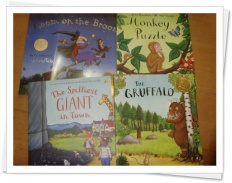
 그림책 단계업!